Simulator training
The loss of process knowledge among operators increases the risk of incidents and downtime. With operator turnover and departures, it becomes crucial to record and transfer knowledge in a timely manner. This way we prevent inefficient or even unsafe situations.
Safe and efficient operations require continuous high skill levels. Training new operators as well as keeping experienced personnel up-to-date are therefore essential. By strengthening process knowledge, cooperation and self-confidence, we minimize downtime and increase productivity and efficiency.
Powerspex has more than 15 years of experience in Operator Training Simulators and Simulator Training. With these training courses, both new and experienced operators improve their knowledge and performance in a safe, virtual environment.
Simulator training:
AEC operators
- 2 days (max. 3 pers.)
- Veenendaal
Train professional skills, prevent mistakes and learn to understand processes. With Powerspex's simulation training courses, operators learn about the processes occurring in waste-to-energy plants and how these processes can be influenced.
Throughout the year, targeted training is given to operators of waste-to-energy plants in the Netherlands. This takes place at the Powerspex location in Veenendaal. The trainings are for both starting and experienced operators. The training is focused specifically on the waste-to-energy plants, so that the operators are trained specifically on their own situation. Scenario-based simulator training, in other words.
This course is part of an industry qualification structure:


Operators train their professional skills in a safe environment using a simulator that mimics the processes in power plants. This simulator aligns with the learning line for production technicians and provides insight into how processes work and can be influenced.
Upon completion of the training, participants understand the commissioning and decommissioning of the AEC and have a broader overview of the process coherence. For experienced operators, the focus is on analyzing and troubleshooting and deepening their knowledge.
- Learn to commission and decommission the plant
- Look at the processes in context
- Learn to work together as a team
- Recognize disruptions and prevent outages
Simulator training:
Protection and restoration process network training national high-voltage grid
- 1 day (max. 4 pers.)
- Engie TTC training center Lelystad
Powerspex Protect & Restore grid training provides insight into the constant balancing actions that are both automated and require manual intervention, performed by national and regional grid operators in cooperation with production and supply companies (PLB).
The training provides an understanding of how the energy balance within a rigid grid is maintained within set limits. Concepts such as FCR, FRR, reactive power and redispatch are covered from the perspective of both the high-voltage grid and power plants.
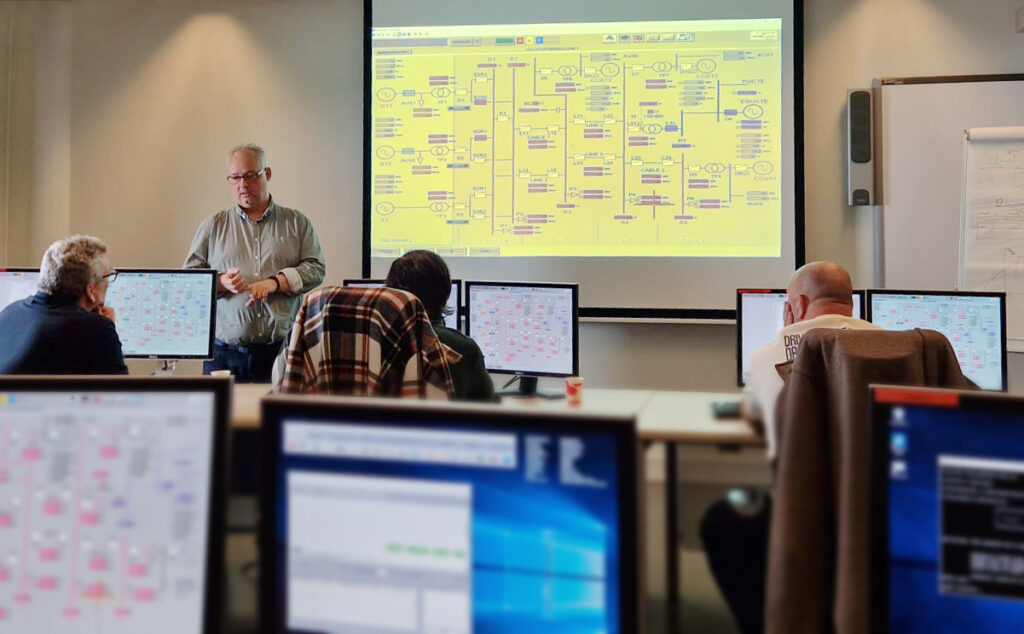
Students gain practical understanding of the generator working diagram, voltage regulation, connecting lines or cables to the generator and grid statism. Using a simulator scenario, they learn in a safe, virtual and practical way the actions required after a blackout and the reconstruction of the high-voltage grid.
During these trainings, students will be exposed to:
- Frequency support through FCR and FRR
- Grid voltage fluctuations due to changing power transmission
- Linking a second unit to an island during a grid construction action
- Regulating voltage on a subgrid
Simulator training:
CRM en Operationele Besluitvorming
- 2 dagen (max. 4 pers.)
- Opleidingscentrum Lelystad
In crisissituaties vormt Crew Resource Management (CRM) het fundament voor effectieve operationele besluitvorming. CRM maximaliseert de inzet van alle beschikbare menselijke en materiële middelen door de nadruk te leggen op een actueel beeld van de situatie, heldere communicatie en leiderschap. Dit voorkomt tunnelvisie en menselijke fouten onder extreme druk.
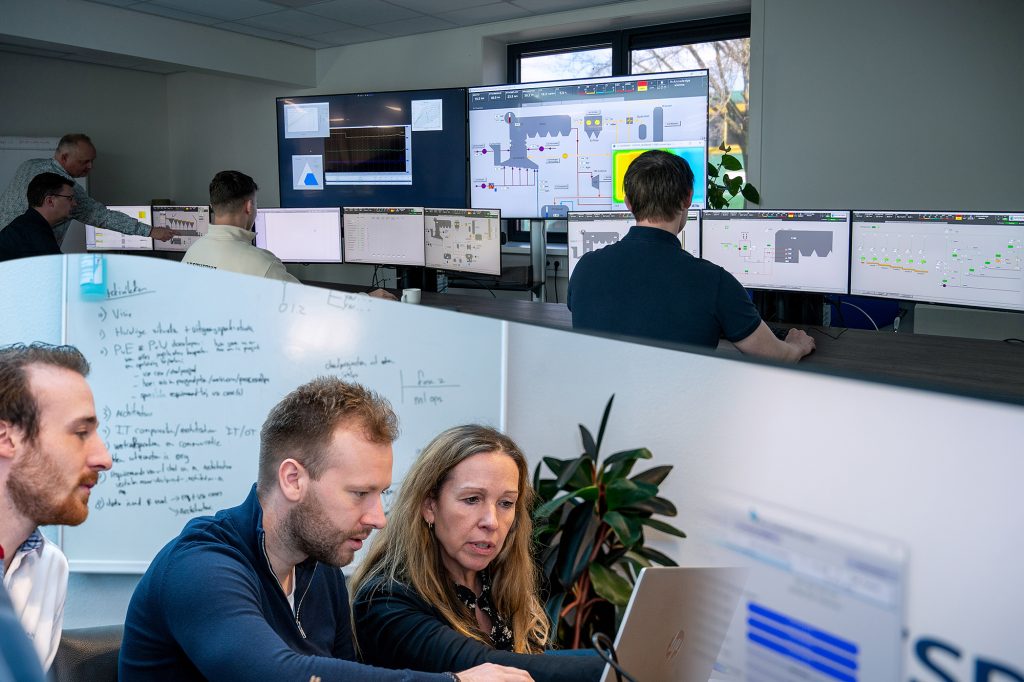
CRM komt oorspronkelijk uit de luchtvaart, maar wordt inmiddels ook toegepast in de zorg, bij de brandweer en andere belangrijke sectoren zoals energie en infra. De belangrijkste aandachtspunten zijn:
- Situational Awareness: het continue opbouwen en delen van het actuele beeld van de crisissituatie’
- Besluitvorming: het afwegen van risico’s en de impact op de situatie
- Assertiviteit en Communicatie: het adresseren van zorgen of twijfels door elk teamlid, ongeacht zijn of haar functie
De Powerspex training CRM en Operationele Besluitvorming is volledig gericht op het handelen, communiceren en het nemen van besluiten ten tijde van een crisissituatie of in een energiecentrale of in het energienetwerk. Dat kan een storing of uitval zijn op lokaal niveau, maar ook als er actie vereist is in het geval van problemen bij de landelijke en regionale energievoorzieningen.
Cursisten krijgen inzicht en worden getraind in:
- Het verifiëren van aannames
- Beslissingen nemen op feiten en het in kaart brengen van mogelijke opties
- Risico’s afwegen en het inschatten van de impact van een beslissing
- Het helder communiceren en het nemen van een weloverwogen besluit
Het functioneren van het team staat hier voorop! Met behulp van simulatorscenario’s leren zij op een veilige, virtuele en praktische manier omgaan met beeldvorming, besluitvorming, communicatie en de daarbij behorende acties na bijvoorbeeld een black-out en de heropbouw van het hoogspanningsnet of een calamiteit op een energiecentrale.
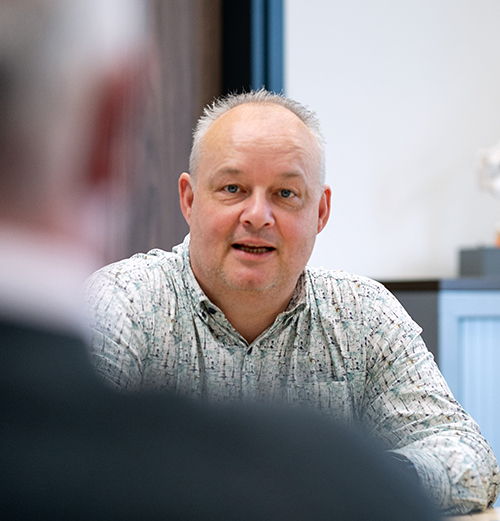
Ron Bakker
Ron Bakker is a leading trainer in training operators within thermal power plants (AEC and PLB). With years of industry experience and a deep-rooted passion for knowledge transfer, Ron is the ideal person to take both novice and experienced operators to the next level.
What sets Ron apart is his unique combination of subject knowledge and teaching skills. He understands the complexities of thermal processes and high voltage networks and knows how to convey them in a clear and practical manner. Whether teaching basic principles or refining advanced skills, Ron provides customized training to fit the specific needs of each participant.