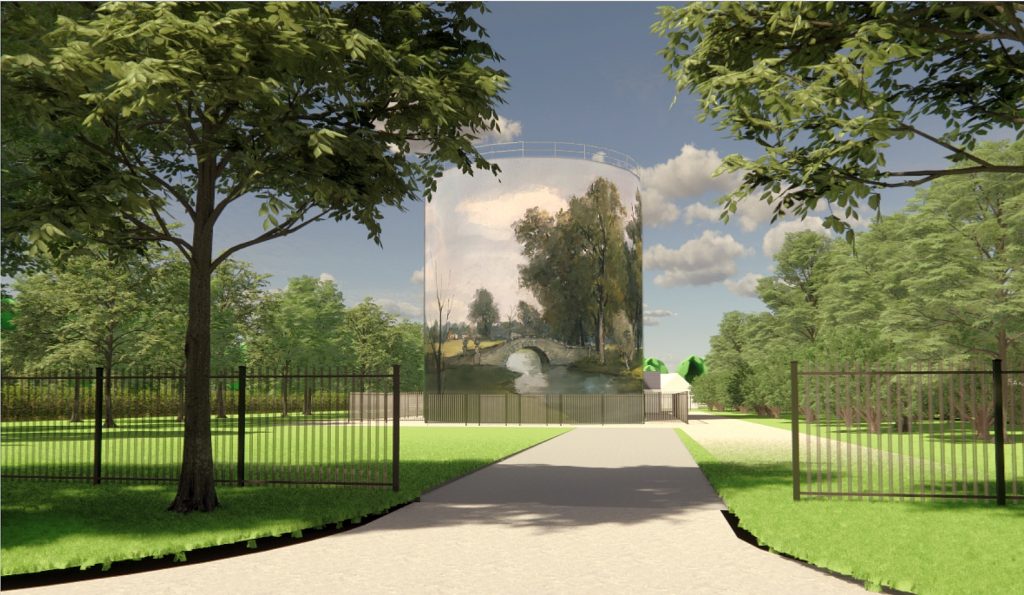
The district heating network in Utrecht and Nieuwegein is provided with four heat buffers, simulated by Powerspex. A nice example of the long-term added value of simulations in PsxCad.
Powerspex has a long history with Eneco's heat grid in Utrecht and Nieuwegein. Once started as an assignment to replace outdated automation with new systems, Powerspex has since grown into a loyal customer for whom Powerspex regularly thinks along about adjustments and expansions in the district heating network.
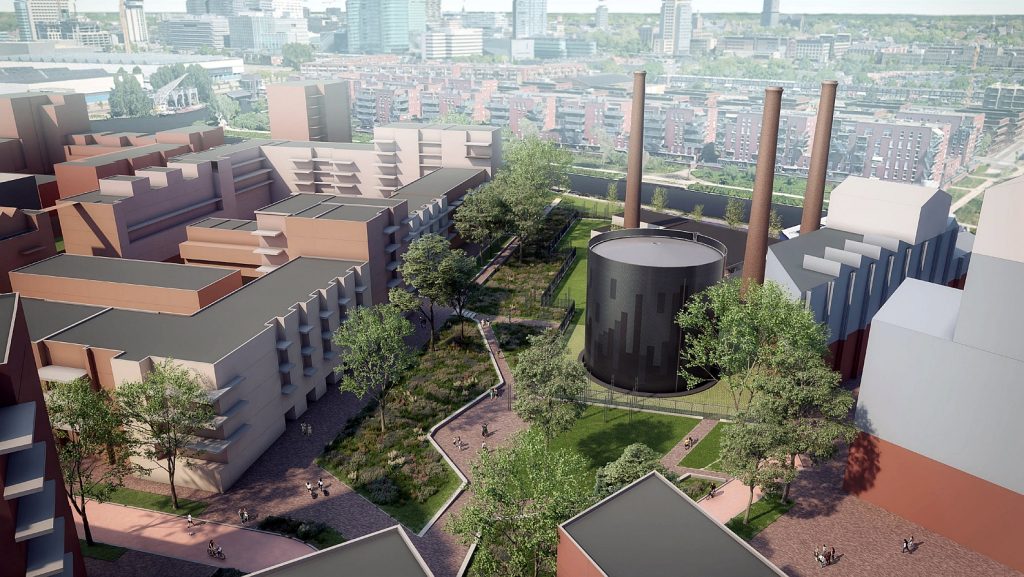
World's oldest heat grid
Utrecht has an extraordinary heat grid. It is one of the oldest heat networks in the world. As a result, it has different ways of transporting heat.
"The technology is therefore complex, also to operate. It is therefore important to gain insight into the practice," says Thijs Mangelsdorf, who ran the first project for Powerspex back in 2011 for the heat grid in Utrecht and Nieuwegein. "At that time, the heat grid was being converted. Even then we made the first simulations to test the software and basically created a Functional Twin. Then it belonged to Nuon, now to Eneco. Nuon wanted to use the simulations to train the operators who had to work with the converted heat grid."
There has been plenty of that: new operators operate district heating with PsxCad. Virtual, in other words, where they are trained to react to situations that occur in practice.
Biggest added value: simulations work enlightening
"But we are 12 years on and things have been and are being rebuilt again. Once again PsxCad and the Functional Twin come in handy. With these, new situations can be sketched very quickly, including their impact. It is very different from looking at a technical drawing in the traditional way. In a simulation you see very different meanings. Bottlenecks also suddenly become visible. PsxCad works clarifying. That is its greatest added value and that is very clearly expressed in Utrecht."
Channel Island as a starting point
Eneco is currently building heat buffers at four locations in Utrecht and Nieuwegein. This is part of making the heat network more sustainable by using sustainable sources in an efficient way.
Powerspex worked with Eneco to map the buffer systems and create a proof-of-concept for the automation of one of the stations. Kanaleneiland station is the starting point with the idea that the other three will become a copy of the Kanaleneiland buffer. The simulation offers a lot of insight here. "How does the buffer function with arrangements that already exist? We tested, virtually commissioned and ran foreseen and unforeseen scenarios," Mangelsdorf summarized. "And that's how we became a lot wiser."
Peek into future
Meanwhile, Eneco has begun construction of the heat buffers. Mangelsdorf, meanwhile, is finalizing the functional design for the software.
"The buffer is the most recent project we are doing for Eneco's Utrecht heat grid, but there have been several projects in the past where we have used simulations successfully. When realizing the booster pump station and laying part of a new pipeline network, for example, simulations and the Functional Twin also proved valuable. The simulations offer you a glimpse into the future. Possible problems are anticipated and the simulations and Functional Twin can grow with the changing installation. It reassures and it provides progressive insight."
Loyal customer
In addition to simulations in PsxCad, Powerspex also provides advice on how automation - especially controls - should be modified at the heat grid in Utrecht and Nieuwegein. It also advises on hardware changes to pumps, pipes, valves, heat exchangers and the like. Powerspex also maintains a service and maintenance contract with Stadswarmte Utrecht and Nieuwegein.
Want to know more about the heat buffers in Utrecht and Nieuwegein? Eneco explains here.